


Section 203 Reshapes How Critical Water Resources Projects Move Forward
For non-federal sponsors working to advance complex water resources projects, Section 203 of the Water Resources Development Act (WRDA) offers a powerful alternative to the traditional federal feasibility study process. Rather than waiting for the U.S. Army Corps of Engineers (USACE) study process, the authority allows sponsors, including navigation districts, ports, states, and local governments, to control the pace and direction of project development by preparing an independent feasibility study that satisfies federal planning requirements and positions the project for congressional authorization, which puts the sponsor in the driver’s seat.
Successfully navigating the Section 203 process requires more than preparing a technical study. Every aspect of the feasibility study, from plan formulation to cost engineering, must be developed within the USACE Civil Works Planning Framework and withstand rigorous external and internal technical, policy, and legal review. Planning, engineering, economics, environmental compliance, and regulatory strategy must be fully integrated from the outset to produce a study that meets federal standards and will be able to move efficiently through the USACE review process.
Anchor QEA has been doing exactly that for more than 20 years by leading multiple USACE planning feasibility studies and environmental impact statement documents as a third-party contractor for harbor deepening, ecosystem restoration, and terminal development projects throughout the United States.
Our multidisciplinary team understands how to develop technically sound feasibility studies and how USACE participates in, evaluates, reviews, and ultimately accepts them. By integrating technical excellence with a deep understanding of the Civil Works and Section 203 process, we help non-federal sponsors reduce risk, maintain momentum, and position their projects for successful federal authorization.
Cedar Port: Successful Section 203 Delivery
The Cedar Port Navigation and Improvement District recently completed an Integrated Feasibility Study and Environmental Impact Study under the Section 203 Program to study a new deepwater connection between the Houston Ship Channel and Cedar Port. The recommended plan establishes a new 3.72-mile, 400-foot-wide, 50.5-foot mean lower low water deep federal navigation channel, along with a turning basin; beneficial use islands to manage dredge material and support oyster, wetland, and upland bird habitat; breakwaters; living shorelines; and jetties.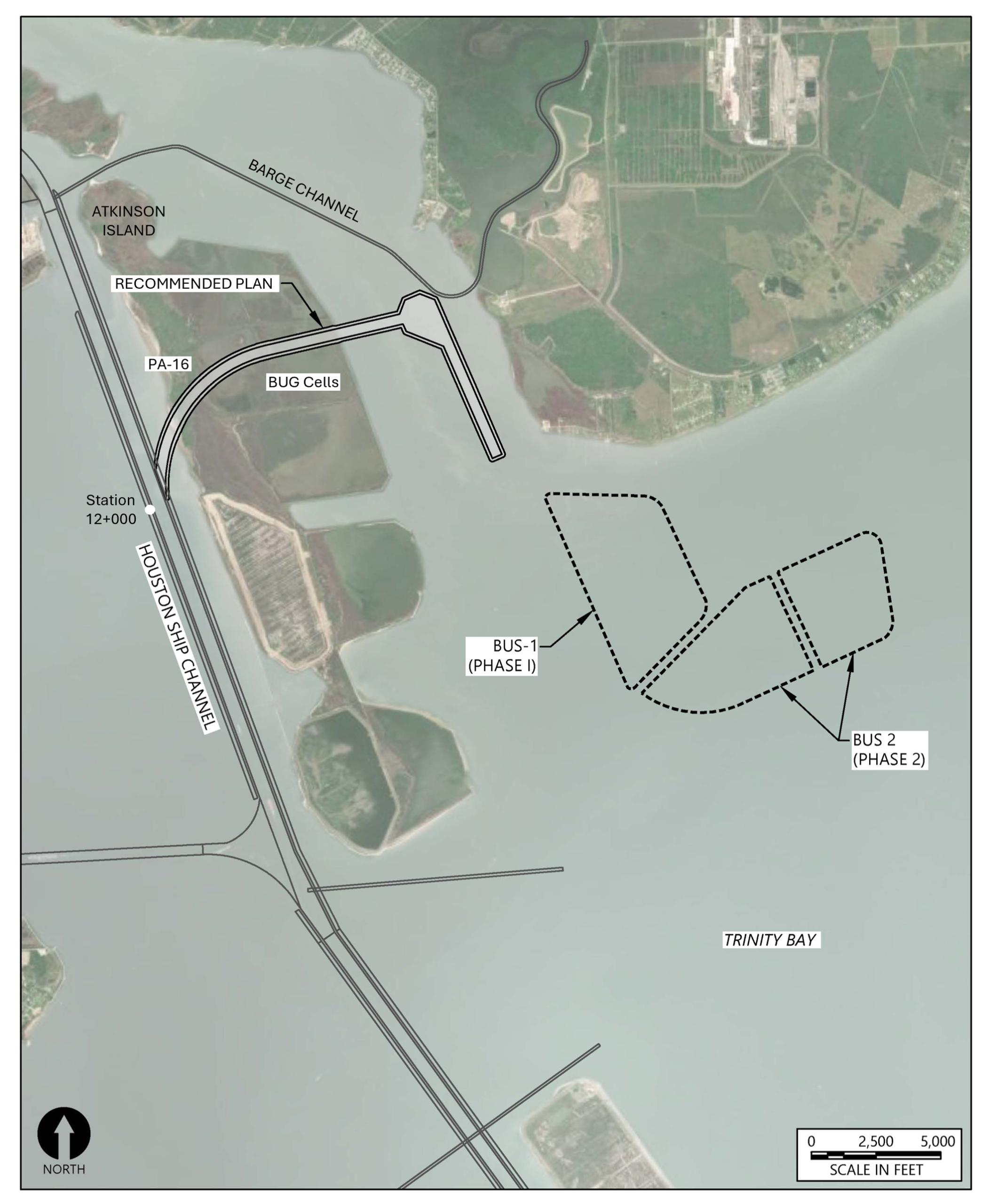
The image to the right shows the recommend plan: Route of new federal deepwater channel and turning basin connecting the Houston Ship Channel to a planned new port terminal. The project maximizes beneficial use of dredge material creating habitat islands while meeting USACE cost standards.
The study reached a major milestone when the Assistant Secretary of the Army for Civil Works Adam Telle signed the Record of Decision (ROD) on July 2, 2026. As the lead consultant providing integrated planning, engineering, and environmental services, Anchor QEA guided the study from execution of the Memorandum of Agreement with the USACE Galveston District through issuance of the ROD in less than 3 years. The Secretary’s Positive Review Assessment has since been submitted for consideration and inclusion in WRDA 2026, the next step on the path to congressional authorization. This milestone shows the project successfully advancing, demonstrating Anchor QEA’s integrated approach works.
Integrating Engineering, Economics, and Environmental Strategy
The Section 203 feasibility study process is multidisciplinary by nature, weaving together engineering, economics, and environmental considerations to drive decision-making but with the added complexities of coordinating with the USACE models and systems, USACE project development team, and the boundaries of inherent governmental processes.
On coastal and navigation projects for example, designs depend on complex site conditions, evolving dredged material strategies, and long-term habitat and maintenance needs, and the models used to develop costs must conform to USACE standards that may be different than the sponsor’s assumptions. Strong teams involve USACE and its tools strategically from day one. The same is true of National Environmental Policy Act compliance, agency coordination and consultation, and regulatory strategy—Section 203 studies depend on how well these are coordinated with technical documentation and must not be treated as separate tracks. With Cedar Port, an integrated feasibility study and environmental impact statement coordination is what helped the project clear its major federal review point.
Anchor QEA has experience deeper than project delivery. Ram Mohan, a principal engineer at Anchor QEA, was part of the National Academies of Science group that helped develop the USACE Section 203 guidelines. Anchor QEA is not simply working within the framework; we helped shape it, which gives sponsors insight into USACE expectations that few consulting teams can offer.
Beyond Cedar Port
Anchor QEA has worked with several major ports including the Port of Long Beach and Port Hueneme, as well as the City of Newport Beach. Working in tandem with USACE, Anchor QEA has supported these clients with feasibility studies that laid the foundation for dredging and port development, enhancing capacity, attracting investment, and meeting evolving customer and regional demands. There are many more opportunities for similar cross-project collaboration.
Section 203 is a path forward to keeping priority projects going. That’s why the U.S. Army’s Section 203 trainings matter for the industry. Anchor QEA will have staff at every training the Army hosts, staying close to evolving guidance, hearing directly from federal partners, and continuing to help sponsors navigate this pathway for future port, navigation, coastal, and water resources projects.
Upcoming USACE Section 203 Workshop Series
July 28 to 30 | Stockton, California
Katie Chamberlin, Principal Planner and Amy Williams, Senior Engineer
August 4 to 6 | New Orleans, Louisiana
Steve Cappellino, Senior Director, Regional Growth and Chris Guy, Principal Engineer
August 8 to 10 | St. Joseph, Missouri
Anthony Ross, PhD, Senior Planner
September 8 to 10 | New York City, New York
Lena DeSantis, Principal Planner
September 15 to 17 | Los Angeles, California
Katie Chamberlin, Principal Planner and Chris Mansour, Senior Managing Engineer
September 22 to 24 | Houston, Texas
Steve Cappellino, Senior Director, Regional Growth and Sara Flaherty, Senior Managing Planner
Planning a Section 203 Project?
Download an overview of Anchor QEA’s Section 203 services and connect with our team about decisions, technical studies, and delivery frameworks to establish a strong project path forward.
Steve Cappellino is a Senior Director, Regional Growth; Lena DeSantis is a Principal Planner; and Sara Flaherty is a Senior Managing Planner at Anchor QEA.