


Environmental Explorers at Seahurst Park: A Community Day of Learning, Discovery, and Stewardship
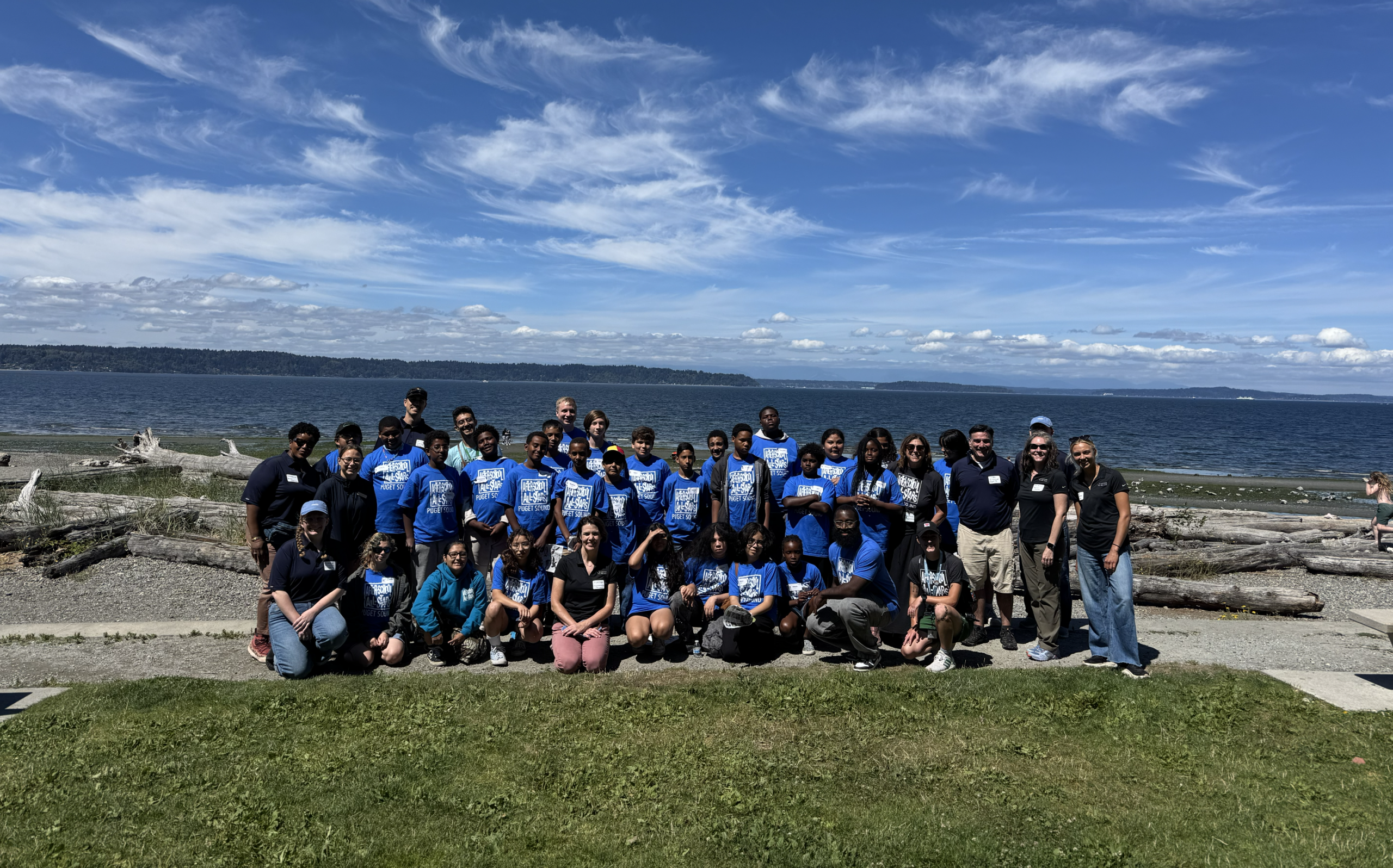
Middle school students joined Anchor QEA and After-School All-Stars Puget Sound at Seahurst Park in Burien, Washington, for a hands-on field trip designed to show that healthy ecosystems are full of connections—between water, land, wildlife, careers, and community. The day was made possible by a youth curriculum developed by Triangle Associates, who helped bring the experience to life.
Throughout the day, students became environmental explorers (complete with sandy shoes), rotating through three restoration stations focused on the tidelands, beach backshore, and estuary. Each activity invited students to observe closely, ask questions, collect data, and see how science and engineering can help restore places that people and wildlife depend on.
That learning took place on a shoreline Anchor QEA helped restore. Working with the City of Burien and the U.S. Army Corps of Engineers, Seattle District, Anchor QEA provided design support for improvements to park and recreational facilities and for the restoration of intertidal beach, riparian areas, wetlands, and creeks that flow into Puget Sound. The broader Seahurst Park Shoreline Restoration effort removed extensive shoreline armoring, restored beach processes and habitat, and helped transform the park into a living outdoor classroom where students could see restoration science in action. The location was especially meaningful for the event because two Anchor QEA volunteers had been part of the original restoration design work, giving students a chance to learn from professionals personally connected to the park’s transformation.
A Day Built Around Curiosity
The event centered on a simple idea: there is more than meets the eye in a restored shoreline. Students explored how healthy environments depend on water, land, and living things working together and how communities, scientists, engineers, planners, landscape architects, and volunteers all play a role in protecting those connections.
Shoreline restoration is about helping natural processes work again. At Seahurst Park, that means improving habitat, reconnecting freshwater and saltwater, allowing sediment and driftwood to move more naturally, and creating a place where community members can safely learn from and enjoy the shoreline.
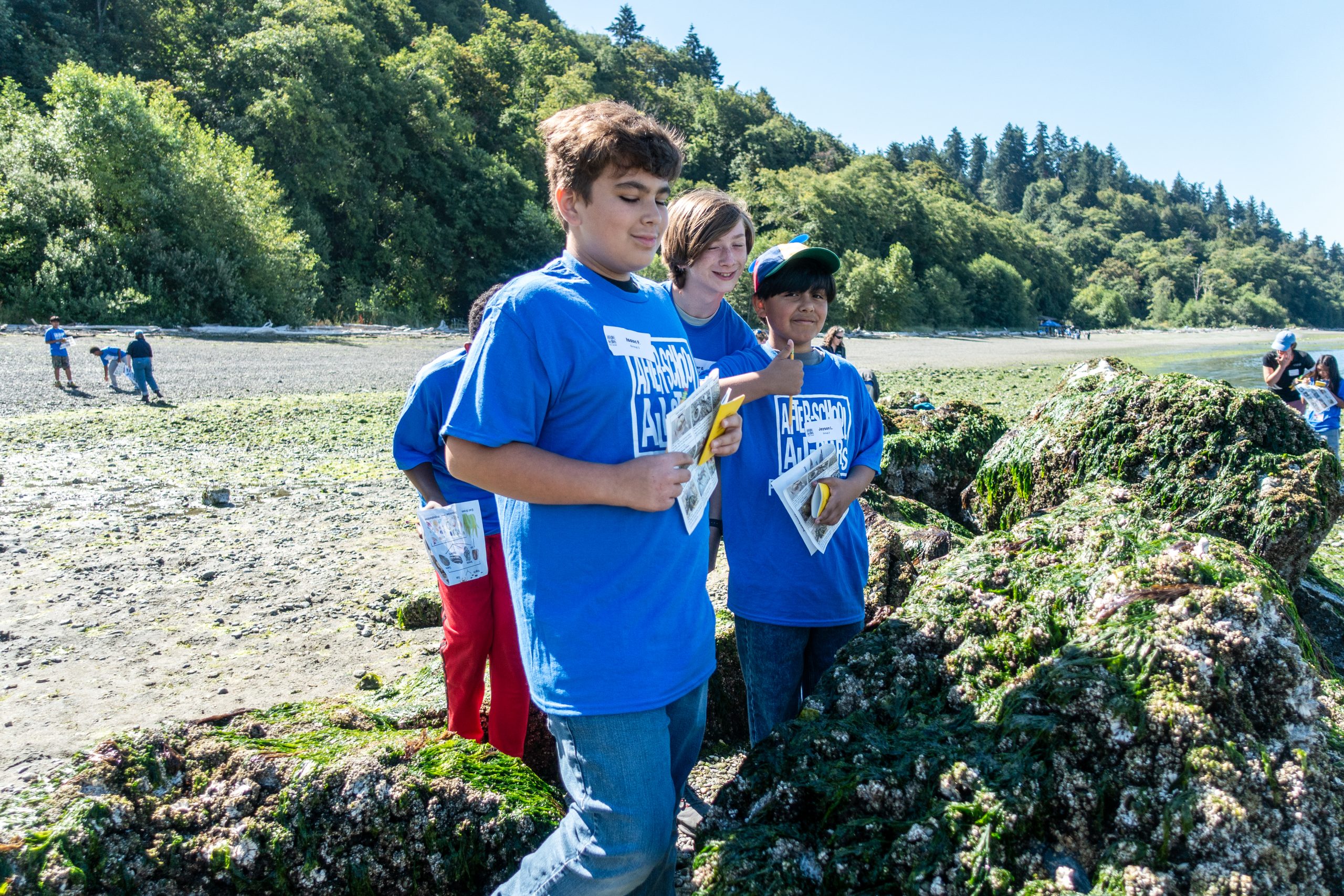
Tidelands: Students explored the intertidal zone—the part of the shoreline that is covered by water at high tide and exposed to air at low tide. They used species identification guides to look for plants, invertebrates, and signs of healthy habitat, learning how eelgrass beds, small sediments, herring, smelt, sea stars, chitons, and snails all connect to the larger Puget Sound food web.
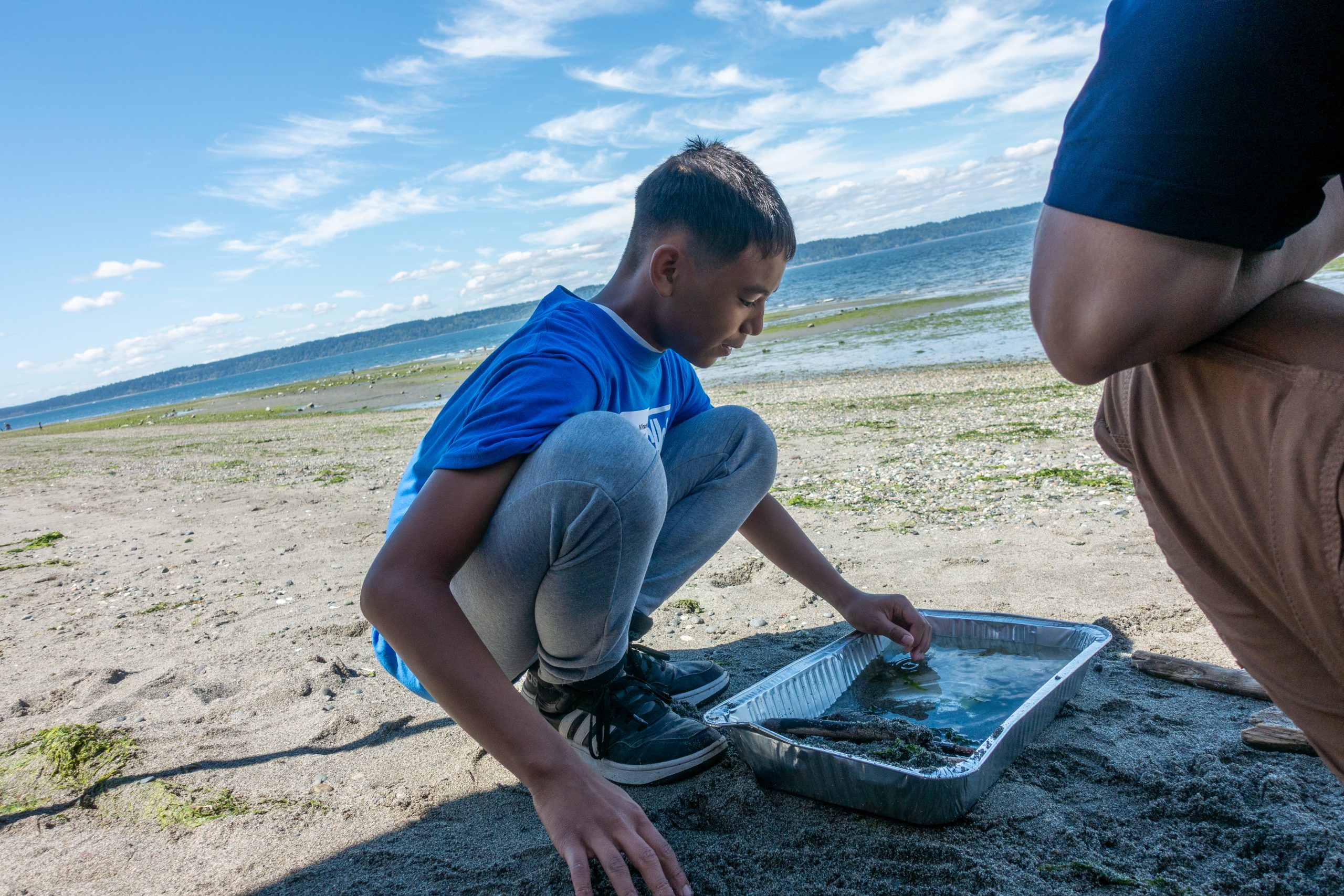
Beach Backshore: Students learned how the upper beach helps protect the shoreline by buffering wave energy, holding driftwood, and allowing sediment to move naturally. After hearing how the former seawall changed erosion patterns and beach habitat, they used sand, rocks, and driftwood to build small models of a restored backshore.
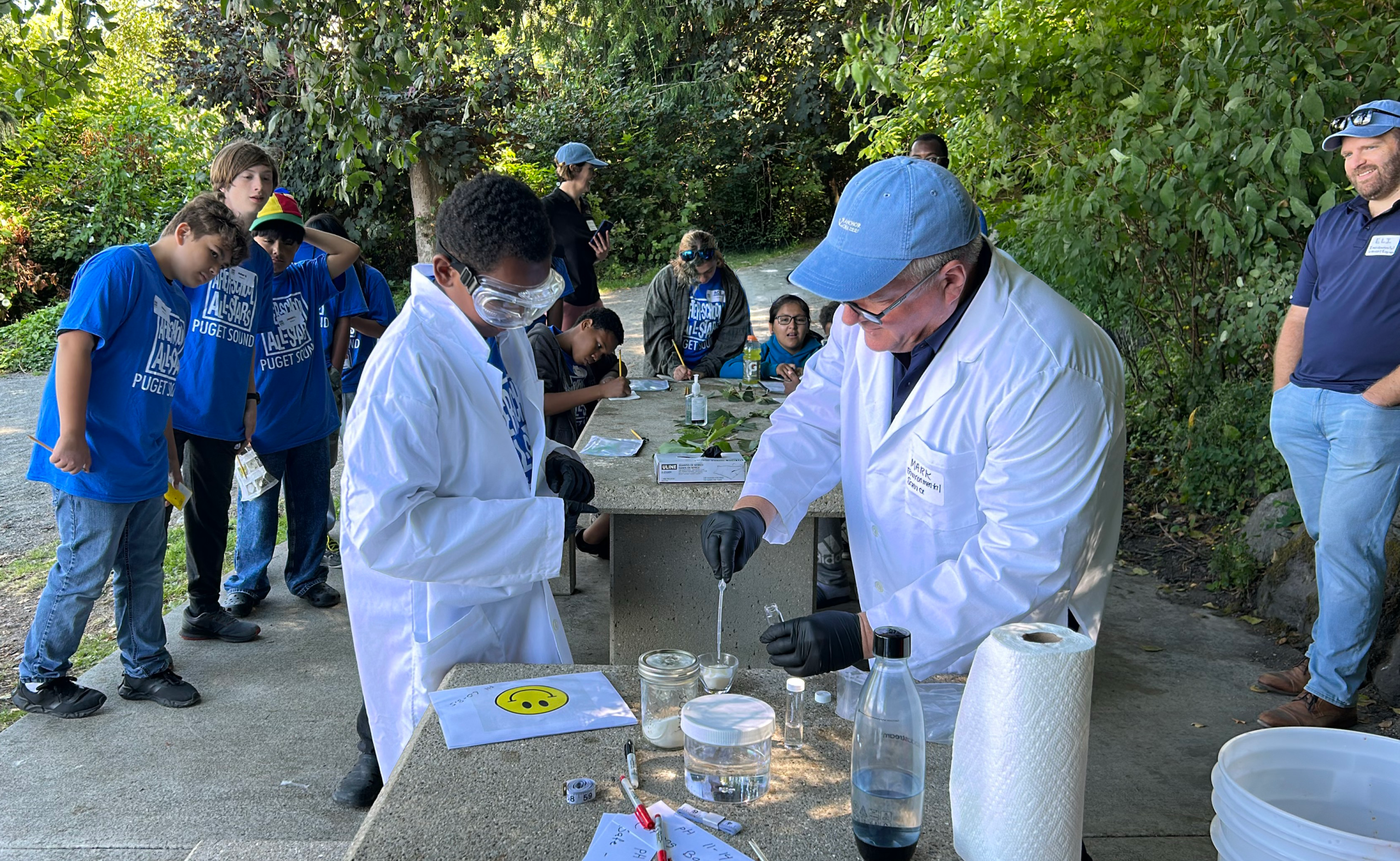
Estuary: Students investigated the connection between forest, freshwater, and Puget Sound. They learned that estuaries form where freshwater meets saltwater and serve as important nursery habitat for species such as salmon. Students sampled pH and temperature in creek water samples and sampled trees to think about how shade, leaves, seeds, sediment, and cool freshwater support a healthy estuary.
Together, the stations helped students connect classroom concepts to a real place in their own community—and to careers that support restoration, resilience, and environmental stewardship.
One student said the estuary station was their favorite part of the day because it helped them understand what makes water healthy for fish and safe for people. Another enjoyed the scavenger hunt for sea creatures and was especially excited to see a sea star up close.
When asked what could make the trip better, several students said, “Nothing—it was just fun.”
Across the stations, students practiced the same kinds of STEM skills used in restoration work: observing carefully, collecting quantitative data such as counts and measurements, recording qualitative notes and sketches, testing ideas through models, and asking how changes in one part of an ecosystem can affect the larger community of people, plants, animals, and water.
Students discovered that restoration can support forage fish and salmon, improve habitat for invertebrates and eelgrass, reduce erosion, reconnect creeks to Puget Sound, and make the shoreline more accessible for community members.
Community, Careers, and Care for Place
One of the most meaningful parts of the day was the chance for the students—the next wave of engineers, scientists, and environmental stewards—to meet environmental professionals and volunteers who work on real-world restoration projects. Anchor QEA team members shared that there is no single path into environmental work: engineering, biology, planning, technology, communications, business, art, and writing can all support healthier ecosystems and stronger communities. Volunteers also shared what nature-positive solutions look like beyond the classroom.
“If we want to build a more diverse future workforce and create a lasting community impact, we need to engage students early, when they are beginning to discover their personal passions, interests, and the career opportunities available to them,” said Heather Page, Principal Environmental Planner and Restoration Lead, who helped organize the event. “By connecting outdoor learning with real-world environmental challenges, we hope to inspire the next generation of environmental professionals.”
The field trip also honored the long history of stewardship at Seahurst Park, including the Indigenous communities who have cared for these lands and waters since time immemorial. Students were encouraged to think about how people have used, cared for, and learned from this place in the past and how their own choices can shape its future.
More than Meets the Eye
By the end of the trip, students had practiced observing, measuring, modeling, and asking thoughtful questions—the same kinds of skills environmental professionals use every day.
More importantly, they had a chance to see Seahurst Park not just as a beach or a field trip destination but as a living community space where forests, freshwater, shoreline habitat, Puget Sound, people, and wildlife are deeply connected.
As students reflected on what they noticed and learned, the day’s theme came to life: in nature, there is always more than meets the eye.